Why do donors withdraw consent?
You may have seen a story in the news recently about a same-sex female couple using sperm donation whose donor subsequently withdrew his consent.
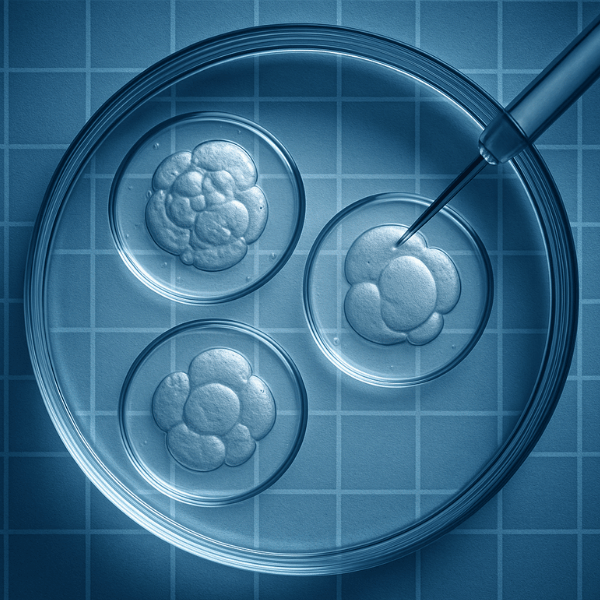
They had already had a son using sperm from that donor and had further embryos in storage in anticipation of creating a sibling. They asked to use those embryos, the donor refused, and UK law gives the donor the right to veto up to that point.
The women were understandably both shocked and distressed at the news. The information was there, buried in the forms they would have signed as part of their treatment at the clinic. But unless it’s made explicit to people, it’s really easy to miss this kind of detail in amongst the huge amount of information they have to read and confirm. Plus, of course, people will assume – or hope – that the situation won’t ever arise for them.
Consent is an absolutely core principle in donor conception. It’s foundational. Donors must understand and agree to what they are offering and prospective parents must understand and agree to what they are accepting. But at the moment, the issue of when the ultimate decision-maker transfers from the donor to the prospective parent legally stands at the point of embryo transfer not embryo creation. As Dr Ahuja and Nick Macklon from London Sperm Bank wrote in their BioNews article arguing for the law to be reformed:
“Before a donated gamete is used, donor choice should be decisive. After a consented embryo has been created, patient certainty should prevail.”
It’s hard to argue with that.
But what I really wanted to know was why the donor had withdrawn his consent.
At one point he had come forward willingly to donate and now suddenly he was no longer happy. That is quite a significant change of heart and mind, particularly given that at least one child had already been born.
Had a new partner raised concerns? Had he read an article relating to donor conception that made him review his opinions? Perhaps the scandals relating to donor limits being exceeded or a negative story from a donor conceived person? Did his family influence him? Had his personal situation changed, making him reconsider? The arrival of children of his own, a serious illness or ethical concerns, perhaps?
And those questions raised other questions.
What counselling had he received, if any, and how in-depth was it?
Did he have time to explore his motivations for donating? Was he given the opportunity to share any doubts or concerns and did the session provide scenarios for him to consider so he might be prepared if his personal situation changed in the future?
I also wondered whether the donor was recruited in the UK or whether the sperm had been imported. If it had been imported, how is the quality of any counselling assessed and, by association, how do we assess the ‘quality’ of his original consent.
Given that UK law now means donors have to agree for their contact details to be shared in the future with any child conceived, and with home DNA testing revealing family secrets daily, those scenarios should also be being brought into the counselling sessions. Donors need to understand the full and long-term implications of their decision.
So, if we look at the spirit of a donor’s consent it goes beyond just agreeing to someone using your gametes. They are consenting to a child being potentially conceived and to forgo any rights or responsibilities over that child. In the UK, he or she is also consenting to have their identifying information shared with the child at 18+ with the possibility of them reaching out for contact, if they wish. And given the impact of home DNA testing, donors should recognise that possibility no matter where they are donating and consider how they might respond.
They are consenting to be both outside a child’s life and yet also foundational and to be a long-term part of the child’s life in some shape or other, completely at the child’s discretion.
That’s quite a delicate balance.
If donors don’t have sufficient space to reflect on their own motivations, intentions and wishes and the potential feelings that might be evoked over time, it might not be surprising that some donors change their minds unexpectedly. For some that will have an immediate impact by them withdrawing their consent. Others may decide to suppress any doubts and not to withdraw consent or it might be too late for them to do so even if they wanted to.
The point is that feelings and circumstances change.
So, it might be expected that feelings will evolve from the point a donor first donates. In fact it would be surprising if they didn’t. Which is not to say that any evolution would conclude with them being unhappy with their choices. It’s simply to recognise that opinions and views often evolve through people’s lives, sometimes quite dramatically, and that process needs to be acknowledged for donors too somehow.
In the case described above, the child that has already been born is likely to be curious about the donor in the future. If they ever meet, the donor will be able to share why he changed his mind and they will find out his personal reasons. He will get his moment, if he chooses, to explain why he denied the parents the chance for a full sibling for this child and possibly the chance of a sibling at all.
That will be an interesting conversation. Although, perhaps, not an easy one.
But before then, it would be really helpful to research donors’ reasons for withdrawing consent more generally. That way we can build better counselling and conversations early on to prevent these scenarios.
For me, this case reinforces the idea that donors need to be offered a level of on-going support to ensure they have a space to go as their own lives and opinions evolve and change, potentially casting their decision to donate in different lights and shades.
Ultimately, we want to protect the long term well-being of the families and children being created. But that has to also include the donor and their well-being. We want them to feel ready and prepared for having conversations with their friends and family, for managing changing circumstances and feelings and for potential contact when the time comes. And, ideally, not regretting or doubting their decision.
That really matters, so let’s do the research we need.
Nina Barnsley
1st October 2026
Notes
We do have an area with information for donors on our website and offer a limited amount of mutual support via a DCN WhatsApp group. If you’re a donor and would like to know more, please do sign up to our mailing list here.
Related articles
Original BBC news story
https://www.bbc.com/news/articles/cr5035eldr3o
Bionews article
Withdrawal of donor consent after the creation of embryos requires HFEA intervention